World Environment Day is a chance for each of us to reflect on how we can do our jobs to the best of our ability while also reducing environmental pollution. As part of the diabetes management industry – where safety and hygiene requirements mean that many products used in daily care, like needles and blood sugar test strips, can only be used once – there aren’t any easy answers. But for me, it’s personal to protect nature, and so this means being creative, collaborative and forward-looking. It’s also about bringing an awareness of our influence on the environment into everything we do.
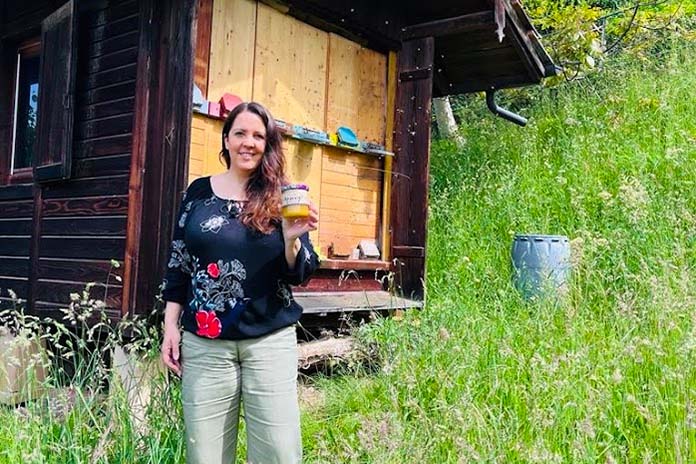
My husband and I have been keeping bees for a couple of years and it’s something that constantly reminds me of just how closely we’re connected to our biosphere. Keeping bees also gives me a long-term perspective on how important it is to protect natural habitats, avoid overharvesting and minimise the use of harmful chemicals. It means making every decision with sustainability in mind.
Chemistry as an industry has traditionally been associated with pollution, hazardous waste and negative environmental consequences. I was born in the countryside, surrounded by nature, so by the time I went to study chemistry, my interest in environmental topics and understanding the sustainability circle was already well ingrained in me, and it was important for me to change this perception. When I joined Roche 14 years ago for my first job as Group Leader for Chemistry Production in Penzberg, Germany, I was pleased to see that sustainability was a big part of the company culture and that we were encouraged to work collaboratively to continuously improve our processes.
Little wins, big gains
The impact of diabetes to our society is huge. By 2045, an estimated 783 million people globally will be living with diabetes1. We need to act now to make diabetes care ‘greener’ so that people will continue to get the solutions they need – but not at the expense of the planet.
Although we can’t avoid the challenges we have in our sector, such as the need for single-use products and robust packaging, we can find innovative ways to create a more sustainable diabetes industry by reducing plastic pollution and limiting our environmental footprint. We are focusing on a greener approach to diabetes without compromising the safety of the services for people with diabetes.
I’ve always made a point of cultivating a culture of improvement where everyone is encouraged to contribute – we’re open to all ideas. I love the power of working together to achieve a goal and find new ways to approach challenges. This sense of empowerment and entrepreneurial spirit has helped us to create some simple yet effective changes with a relevant impact on our environmental footprint.
One initiative that came from the ‘shop floor’ was to stop using the plastic film wrapped over product pallets. After analysing the impact of eliminating the unnecessary film, we discovered that we could save hundreds of kilos of plastic every year. Making this change was possible because our corporate culture invites anyone to challenge the established way of doing things. By making sustainability part of our everyday thinking and investing in our future, the diabetes care industry can overcome its specific challenges to make a positive contribution to the environment.
Steps towards a greener future
Some of the key steps we have taken at Roche Diabetes Care include applying innovation to the design of our products and packaging. We’re constantly striving to develop smaller devices – because they require smaller packages that then go on fewer storage pallets and therefore need less warehouse space and fewer transportation vehicles.
We have redesigned our blood glucose test strips, resulting in a 60% reduction of the environmental footprint, as we use 1,000 tonnes less plastic per year. Our new Accu-Chek Solo patch pump comes in 100% recyclable packaging and is a tube-free insulin pump with a modular design, which reduces plastic usage and waste.
We have eliminated plastic foam and plastic bubble wrap in our packaging and replaced this with paper and corrugated cardboard. Where possible, we’re also reusing intermediate packaging material when shipping materials from a supplier to our site.
It isn’t just packaging and materials that we’ve begun to rethink. We’re using green energy across our manufacturing sites. Our Mannheim campus in Germany has reduced CO₂ emissions by half since 2018. In Sant Cugat, near Barcelona in Spain, we installed photovoltaic panels on our roof and put in place rain collection systems for landscape watering.
One of the most important approaches we’ve taken, however, is to not focus just on ourselves. We expect our suppliers to live up to the same standards that we apply to Roche, whether that’s waste handling or onsite safety. If they’re not meeting these expectations, we find ways to train and educate them on how to improve their safety, health and environmental practices. Everyone has a part to play along a product’s journey – from its development to its manufacture and shipping, to its disposal at the end of its life cycle.
From conscious mindsets to collective responsibility
Promoting sustainability throughout the organisation is our highest priority, not only in Diabetes Care, but across the entire Roche Group. We have an ambitious goal to achieve real zero-emissions by 2050 with no requirement for carbon off-setting measures – and everyone at Roche has a part to play.
This year’s focus for World Environment Day, Beat Plastic Pollution, is particularly close to our hearts. We have a strong focus on educating and raising awareness about the importance of reducing plastic and the benefits of sustainable practices, both internally and externally with our partners, customers and stakeholders. As part of this, we share knowledge, resources and best practices to overcome challenges and promote sustainable solutions.
I am proud to be part of this movement within the diabetes care industry, encouraging the development and use of alternative materials and limiting single-use plastic.
Sustainability is a collective responsibility. We can’t achieve our goals alone and must continuously improve our practices and performance to achieve our targets. We need to act now as each step, even the smallest ones, count. As I see the impact of plastic pollution on the environment and how it contributes to the overall decline in biodiversity, I’m dedicated to preserving my bee population. That drives me to continue my mission and realise our collective vision at Roche. It’s everyone’s business: together we can and must #BeatPlasticPollution.
Reference
1 IDF Diabetes Atlas 2021